 Log in


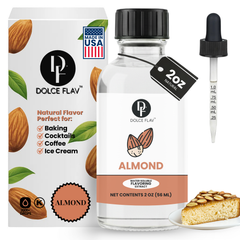


When new candy makers price out their first real production run, the flavoring line item often causes sticker shock. Fifteen dollars for a 2-ounce bottle? Multiply by ten flavors and it feels like real money.
But flavor isn't priced by the bottle — it's priced by the batch. Do that math and you can compare the actual flavor cost per sellable unit instead of judging value from bottle price alone.
The Only Number That Matters: Cost Per Batch
Weigh the unflavored batch and add Dolce Flav concentrate at 0.3–0.6% of that weight (batch grams × 0.003–0.006). For example, 1,000 g of unflavored mixture gets 3–6 g of flavor, added on top. Start at the lower end and adjust within this range. For hard candy, use the cooked mixture’s weight before adding flavor. To cost flavor, divide the bottle price by its net flavor weight in grams, then multiply by the measured flavor grams used per batch. Do not infer net flavor weight from fluid ounces without the product’s density.
Divide the calculated flavor cost per batch by the actual sellable units to find flavor cost per unit. Batch size, selected use rate, bottle net weight, purchase price and yield determine the result; a fixed cost per batch cannot be assumed.
Where Beginners Actually Overspend
A costly mistake is choosing a formula that does not suit the application. Compare the exact carrier, solubility and addition-stage guidance before buying. Explore gummy flavor options, then confirm dispersion and performance in your actual base; oil-soluble does not by itself establish compatibility with an aqueous gummy mixture or heat stability in hard candy.
Over-flavoring can increase cost without improving the finished product. Weigh the complete unflavored base and use the selected product’s current guidance. For Dolce Flav food concentrates, begin at 0.3% and evaluate within the 0.3–0.6% range where appropriate; calculate hard-candy flavor from the cooked mixture before addition, and count flavor blends together. Evaluate a safely cooled, fully prepared sample, not dangerously hot candy or slurry. Record flavor grams instead of adjusting in unmeasured drops.

When to Move Up a Size
Most Dolce Flav flavors ship in 2 oz, 8 oz, 32 oz, 1-gallon and 5-gallon formats, and the unit economics improve at every step. Take blue raspberry: $14.95 for 2 oz versus $64.95 for 32 oz — sixteen times the volume for about four times the price. Per ounce, the 32 oz bottle costs roughly a quarter as much.
The rule of thumb: once a flavor earns a permanent spot on your menu and you're reordering 2 oz bottles monthly, step up to 8 oz or 32 oz. Reserve gallon sizes for your one or two hero flavors with proven, steady sell-through — tying up cash in slow flavors is its own cost.
Don't Forget the Rest of the Batch
The same per-batch discipline applies across your gummy ingredients. 275-bloom gelatin runs $14.95 for 250 grams, with a 1 kg size at $45.95 for regular producers — again, the step-up beats repeat small orders. Natural colorings follow the pattern too: compare the exact natural red coloring product’s current guidance and trial result. Do not transfer the flavor-use range or an unmeasured drop count to food coloring. If you're weighing the clean-label switch, our natural coloring transition guide covers the pricing angle in detail.
Timing Matters, Too
Buying bulk right before your busy season protects both cash flow and lead times. With Halloween production kicking off now — see our Halloween production timeline — August is exactly when stepping up a size pays off. And if farmers markets are your channel, our market playbook pairs well with this math.
FAQ
How many batches does a 2 oz bottle of flavoring make?
Use bottle net flavor grams ÷ flavor grams per batch. Flavor grams per batch equal the unflavored base grams × 0.003–0.006. A fluid-ounce bottle size alone does not establish a batch count.
When should I buy gallon sizes?
Only after a flavor has proven steady sell-through. Start at 2 oz to validate, move to 8–32 oz when reorders become monthly, and go gallon on your one or two bestsellers.
Is concentrated flavoring cheaper than supermarket extract?
Compare the measured dose that works in the same finished recipe, verified net weight, current price and sellable yield. A concentrate is not automatically cheaper per batch than another extract.
Before comparing bulk quotes
Validate the chosen dose with the supplier sample evaluation plan, then use the bulk quote checklist to collect comparable formula, quantity and delivery information. Discuss your production requirements once the application and forecast are clear.