 Log in


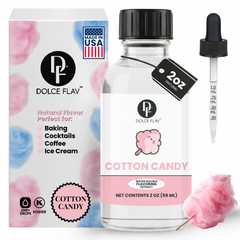
A strong flavor can support an entire menu when every application has a clear job. Cotton Candy Flavoring gives makers a concentrated way to develop nostalgic spun-sugar sweetness with soft vanilla notes without rebuilding the base recipe around bulky ingredients. This guide turns that versatility into 10 practical concepts, then shows how to test, cost and scale the winners.
Dolce Flav concentrates are not designed to be tasted straight. Start below the target intensity, follow the current product documentation, mix thoroughly and evaluate the finished food or drink after its real processing and holding conditions.
Why Cotton Candy Flavoring works across a menu
The commercial advantage is control. A concentrated flavor lets you adjust aroma independently from sugar, water and texture. That makes it easier to create a family of products with a recognizable flavor signature while keeping each format technically appropriate.
Cotton Candy Flavoring pairs especially well with lemon, strawberry, blue raspberry, vanilla, cream and sparkling water. Use those partners to create contrast and depth, but keep the main flavor easy to identify. If customers need the menu description to understand what they are tasting, the supporting ingredients may be too aggressive.
Choose a compatible system for the recipe. This featured product is described on its product page; always confirm its current solubility, ingredients, allergen information and suggested use level before production. Compare other options in Dolce Flav’s related flavor collection, and use the complete concentrated flavoring guide for a broader development method.
10 product ideas for Cotton Candy Flavoring
1. Cotton-candy Italian soda
Use cotton-candy italian soda as a focused expression of nostalgic spun-sugar sweetness with soft vanilla notes. Build the base first, then add measured flavoring in small increments. Taste the complete serving—not the concentrate—and record the exact addition by weight or verified drop count. For a commercial version, define portion size, garnish, service time and holding limit before launch.
2. Pink lemonade refresher
Use pink lemonade refresher as a focused expression of nostalgic spun-sugar sweetness with soft vanilla notes. Build the base first, then add measured flavoring in small increments. Taste the complete serving—not the concentrate—and record the exact addition by weight or verified drop count. For a commercial version, define portion size, garnish, service time and holding limit before launch.
3. Birthday milkshake
Use birthday milkshake as a focused expression of nostalgic spun-sugar sweetness with soft vanilla notes. Build the base first, then add measured flavoring in small increments. Taste the complete serving—not the concentrate—and record the exact addition by weight or verified drop count. For a commercial version, define portion size, garnish, service time and holding limit before launch.
4. Cotton-candy buttercream
Use cotton-candy buttercream as a focused expression of nostalgic spun-sugar sweetness with soft vanilla notes. Build the base first, then add measured flavoring in small increments. Taste the complete serving—not the concentrate—and record the exact addition by weight or verified drop count. For a commercial version, define portion size, garnish, service time and holding limit before launch.
5. Whipped cheesecake cups
Use whipped cheesecake cups as a focused expression of nostalgic spun-sugar sweetness with soft vanilla notes. Build the base first, then add measured flavoring in small increments. Taste the complete serving—not the concentrate—and record the exact addition by weight or verified drop count. For a commercial version, define portion size, garnish, service time and holding limit before launch.
6. Layered party gelatin
Use layered party gelatin as a focused expression of nostalgic spun-sugar sweetness with soft vanilla notes. Build the base first, then add measured flavoring in small increments. Taste the complete serving—not the concentrate—and record the exact addition by weight or verified drop count. For a commercial version, define portion size, garnish, service time and holding limit before launch.
7. Frozen lemonade
Use frozen lemonade as a focused expression of nostalgic spun-sugar sweetness with soft vanilla notes. Build the base first, then add measured flavoring in small increments. Taste the complete serving—not the concentrate—and record the exact addition by weight or verified drop count. For a commercial version, define portion size, garnish, service time and holding limit before launch.
8. Sparkling mocktail
Use sparkling mocktail as a focused expression of nostalgic spun-sugar sweetness with soft vanilla notes. Build the base first, then add measured flavoring in small increments. Taste the complete serving—not the concentrate—and record the exact addition by weight or verified drop count. For a commercial version, define portion size, garnish, service time and holding limit before launch.
9. Cotton-candy ice cream
Use cotton-candy ice cream as a focused expression of nostalgic spun-sugar sweetness with soft vanilla notes. Build the base first, then add measured flavoring in small increments. Taste the complete serving—not the concentrate—and record the exact addition by weight or verified drop count. For a commercial version, define portion size, garnish, service time and holding limit before launch.
10. Celebration cold foam
Use celebration cold foam as a focused expression of nostalgic spun-sugar sweetness with soft vanilla notes. Build the base first, then add measured flavoring in small increments. Taste the complete serving—not the concentrate—and record the exact addition by weight or verified drop count. For a commercial version, define portion size, garnish, service time and holding limit before launch.
Small-batch recipe: Cotton-Candy Party Syrup
This development formula creates a neutral base that can be adjusted for the intended application. Ingredients: 500 g water, 450 g sugar, 1 g fine salt, plus Cotton Candy Flavoring to taste within the current documented usage guidance.
- Sanitize the work area and weigh every ingredient with an appropriate scale.
- Combine the base ingredients until fully dissolved or homogeneous. Cool to room temperature when heat is used.
- Divide into three 100-gram test portions. Add a low, medium and slightly higher measured amount of flavoring.
- Mix thoroughly, label each sample and let it rest for at least ten minutes before tasting.
- Evaluate in the complete intended serving. Select the lowest dose that remains clear after dilution, chilling, baking or freezing.
- Record the winning percentage, not only a drop count. Confirm the result in a second batch.
Use the finished base for sodas, lemonades, frostings, shakes and frozen drinks. Treat it as a development starting point, not a shelf-stable commercial formula. Refrigerate perishable homemade mixtures and obtain qualified food-safety and shelf-life guidance before selling a packaged product.
How to scale the recipe without losing the flavor
Convert everything to grams and percentages
Weigh the finished successful test, calculate each ingredient as a percentage of total batch weight and write the flavor addition to sufficient decimal precision. Percentage-based formulas scale more reliably than cups and spoonfuls.
Run a bridge batch
Do not jump directly from a countertop test to full production. Make an intermediate batch using the real mixer, kettle, freezer or depositor. Equipment changes shear, aeration, evaporation and flavor distribution.
Control order of addition
Write the exact sequence, temperature and mixing time. When possible, add volatile flavor after the highest-heat step, while still allowing complete distribution. Recheck the current product documentation for processing recommendations.
Judge the customer serving
A concentrate may smell powerful in the mixing vessel yet taste weak after ice, milk, carbonation or freezing. Evaluate the final portion at service temperature and after the expected hold time. Frozen products often need a different balance than room-temperature samples.
Costing and merchandising
Calculate cost per finished portion from actual yield, not theoretical batch size. Include base ingredients, flavor, packaging, garnish, labor allowance, processing loss and waste. A visually complicated special can sell well but still lose margin if it slows the line.
Merchandise the flavor with one clear promise. Name the recognizable format first, then the flavor: “Blue Raspberry Lemonade” is easier to process than a vague fantasy name. Product photography should show the real serving, accurate color and realistic texture. Write alt text that describes the image rather than stuffing keywords.
Use one hero product to introduce the flavor, then cross-sell a drink, dessert or take-home item. Link menus and campaign landing pages directly to the relevant Cotton Candy Flavoring product page so an interested maker has an obvious next step.
Quality-control checklist
- Confirm the correct product and lot before batching.
- Use a calibrated scale or validated dispensing method.
- Record batch weight, flavor amount, operator, time and temperature.
- Check appearance, aroma, taste and texture against an approved reference.
- Test after the real bake, freeze, carbonation or hold period.
- Retain a labeled sample when appropriate for the operation.
- Validate food safety, allergens, labeling, packaging and shelf life with qualified professionals.
Start with one idea and build a repeatable winner
The smartest launch is not all 10 concepts at once. Choose the idea that fits your equipment and customer, run three controlled flavor tests and document the winner. Once the flagship performs consistently, extend the same flavor story into adjacent items.
Shop Cotton Candy Flavoring, browse the related Dolce Flav collection, and keep the concentrated food flavoring guide beside your production notes.