 Log in


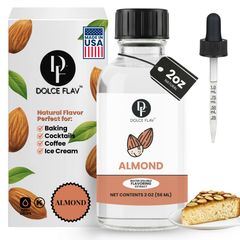
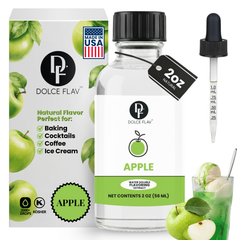

When new candy makers price out their first real production run, the flavoring line item often causes sticker shock. Fifteen dollars for a 2-ounce bottle? Multiply by ten flavors and it feels like real money.
But flavor isn't priced by the bottle — it's priced by the batch. Do that math and concentrated flavoring turns out to be one of the cheapest ingredients in your candy, and one of the few that directly drives repeat purchases.
The Only Number That Matters: Cost Per Batch
Concentrated flavor oils are typically dosed in small fractions of a percent of your batch weight — a few drops to a fraction of a teaspoon for a home-scale batch, scaled proportionally as your batches grow. A 2-ounce bottle contains roughly 12 teaspoons, so even at a generous ½ teaspoon per batch, one $14.95 bottle covers about two dozen batches.
That works out to well under a dollar of flavor per batch. If a batch yields 40–50 sellable gummy bags at $6–8 each, flavoring is costing you pennies per unit — usually far less than your packaging, and often less than your labels.
Where Beginners Actually Overspend
The expensive mistake isn't the bottle price; it's the wrong product. Grocery-store extracts are dilute, so makers compensate by pouring in more — adding water to water-sensitive candy, muting flavor, and burning through bottles. Concentrated gummy flavoring oils solve both problems: stronger flavor at a lower usage rate, and an oil-soluble format that stands up to hot slurries and hard candy syrup.
The second leak is over-flavoring. Dose conservatively — start low, taste the warm slurry, adjust in drops. Your palate fatigues fast when you taste all day; a swatch batch and notes protect you from creeping doses that quietly double your flavor spend.

When to Move Up a Size
Most Dolce Flav flavors ship in 2 oz, 8 oz, 32 oz, 1-gallon and 5-gallon formats, and the unit economics improve at every step. Take blue raspberry: $14.95 for 2 oz versus $64.95 for 32 oz — sixteen times the volume for about four times the price. Per ounce, the 32 oz bottle costs roughly a quarter as much.
The rule of thumb: once a flavor earns a permanent spot on your menu and you're reordering 2 oz bottles monthly, step up to 8 oz or 32 oz. Reserve gallon sizes for your one or two hero flavors with proven, steady sell-through — tying up cash in slow flavors is its own cost.
Don't Forget the Rest of the Batch
The same per-batch discipline applies across your gummy ingredients. 275-bloom gelatin runs $14.95 for 250 grams, with a 1 kg size at $45.95 for regular producers — again, the step-up beats repeat small orders. Natural colorings follow the pattern too: a 2 oz dropper bottle of natural red colors many batches at a few drops each, and 32 oz sizes await when demand proves out. If you're weighing the clean-label switch, our natural coloring transition guide covers the pricing angle in detail.
Timing Matters, Too
Buying bulk right before your busy season protects both cash flow and lead times. With Halloween production kicking off now — see our Halloween production timeline — August is exactly when stepping up a size pays off. And if farmers markets are your channel, our market playbook pairs well with this math.
FAQ
How many batches does a 2 oz bottle of flavoring make?
At typical conservative dosing — a few drops to ½ teaspoon per batch — expect roughly 20–30 home-scale batches per 2 oz bottle, more if your recipes run lighter.
When should I buy gallon sizes?
Only after a flavor has proven steady sell-through. Start at 2 oz to validate, move to 8–32 oz when reorders become monthly, and go gallon on your one or two bestsellers.
Is concentrated flavoring cheaper than supermarket extract?
Per batch, almost always — concentrated oils are used at a fraction of the rate, so a bottle stretches much further even when its sticker price is higher.